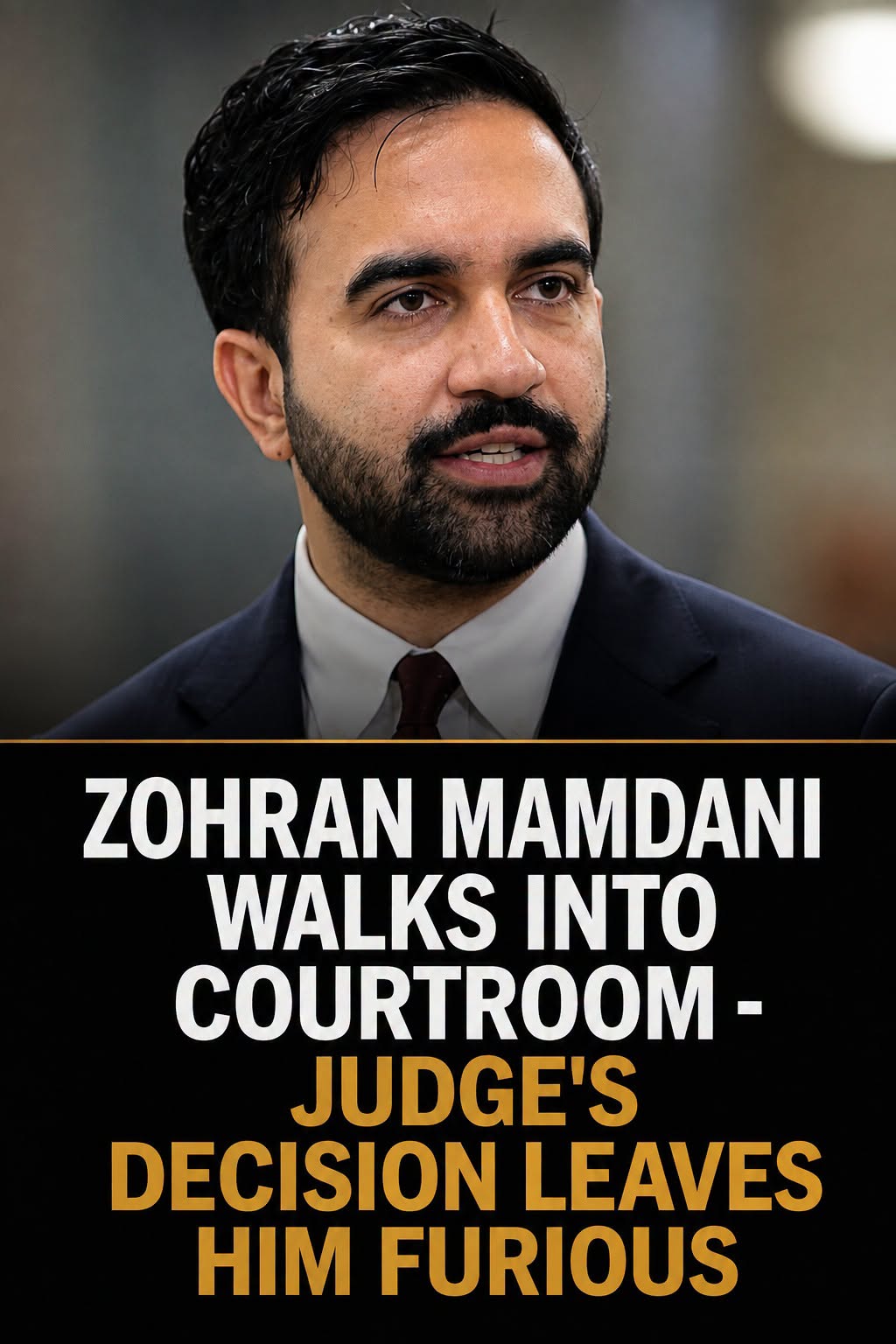

New York City Mayor Zohran Mamdani has encountered a series of challenges this week and he’s not happy about it.
A federal bankruptcy judge temporarily blocked the city’s effort to halt the sale of more than 5,000 rent-subsidized apartments owned by Pinnacle Group, one of New York City’s largest landlords.
U.S. Bankruptcy Judge David Jones of the Southern District of New York ruled that the city could not intervene in the bankruptcy proceedings, allowing the auction process to continue.
Pinnacle filed for bankruptcy in May after defaulting on approximately $560 million in loans.
The Mamdani administration has separately alleged the company owes the city $12.7 million in unpaid housing code fines. His administration also wants to essentially confiscate the now-privately own properties.
Mamdani directed the city’s Law Department to oppose the proposed sale, arguing that new ownership could create additional housing instability for thousands of tenants living in subsidized apartments.
Jones, however, ruled that the bankruptcy sale should proceed.
Pinnacle, owned by Joel Wiener, controls more than 140 residential buildings comprising roughly 9,000 apartments across New York City’s five boroughs.
Court filings indicate Summit Real Estate Holdings has offered approximately $450 million to acquire about 90 of those properties.
Attorneys representing Pinnacle argued the sale would provide financial stability and improve building operations.
City attorneys countered that Summit’s financial resources may be insufficient to rehabilitate the properties, warning that additional financial distress could create further instability for tenants.
The proposed sale has drawn mixed reactions from tenant groups, with some citing longstanding maintenance concerns under Pinnacle’s ownership while others worry new ownership could lead to higher rents or reduced oversight.
Separately, Mamdani’s proposal to establish five city-operated grocery stores is facing a potential legal challenge from a coalition representing small businesses throughout New York City.
The Multicultural Business Coalition announced plans to sue the city, arguing that publicly funded grocery stores would compete unfairly with privately owned supermarkets and neighborhood bodegas.

According to coalition chairman Frank Garcia, the organization plans to raise approximately $1 million to finance the litigation and a public awareness campaign.
The coalition represents 50 chambers of commerce whose members include Asian-, African-, Caribbean-, Hispanic-, Middle Eastern-, and Jewish-owned businesses across the city.
Business owners contend that government-operated grocery stores would benefit from competitive advantages unavailable to private retailers. Under the city’s proposal, the stores would operate on municipally owned property, eliminating commercial rent expenses, and would sell staple items—including produce, meat, milk, cheese, and bread—at prices the city estimates would be about 30% below prevailing market rates.
City officials expect the first municipally operated grocery store to open in the Bronx next year.
The government of Kansas City, Mo., failed experiment with publicly supported grocery stores has become a prominent example in the debate over government involvement in the grocery business.
In 2014, the city purchased the Linwood Shopping Center in an effort to bring a full-service grocery store to an area long considered a food desert.
After investing millions of dollars in redevelopment, the city opened a Sun Fresh grocery store in 2018 through a nonprofit operator rather than managing the store itself.
Over the following years, Kansas City provided additional substantial financial assistance to keep the store operating as it struggled with declining sales, rising security costs, inventory shortages, and operating losses.
Despite nearly a decade of public investment totaling roughly $18 million, the store closed in August 2025 after the operator said it could no longer remain financially viable.
The closure left the surrounding neighborhood once again without a full-service grocery store and prompted city officials to seek a new private operator for the location rather than continue under the previous model.
The episode has since been cited by both supporters and critics of public involvement in grocery retail.
Critics argue it illustrates the financial and operational challenges of sustaining publicly subsidized grocery stores, while supporters contend the project was undermined by broader issues such as crime, poverty, and the difficulties of operating in an underserved neighborhood rather than by the concept of public investment itself.