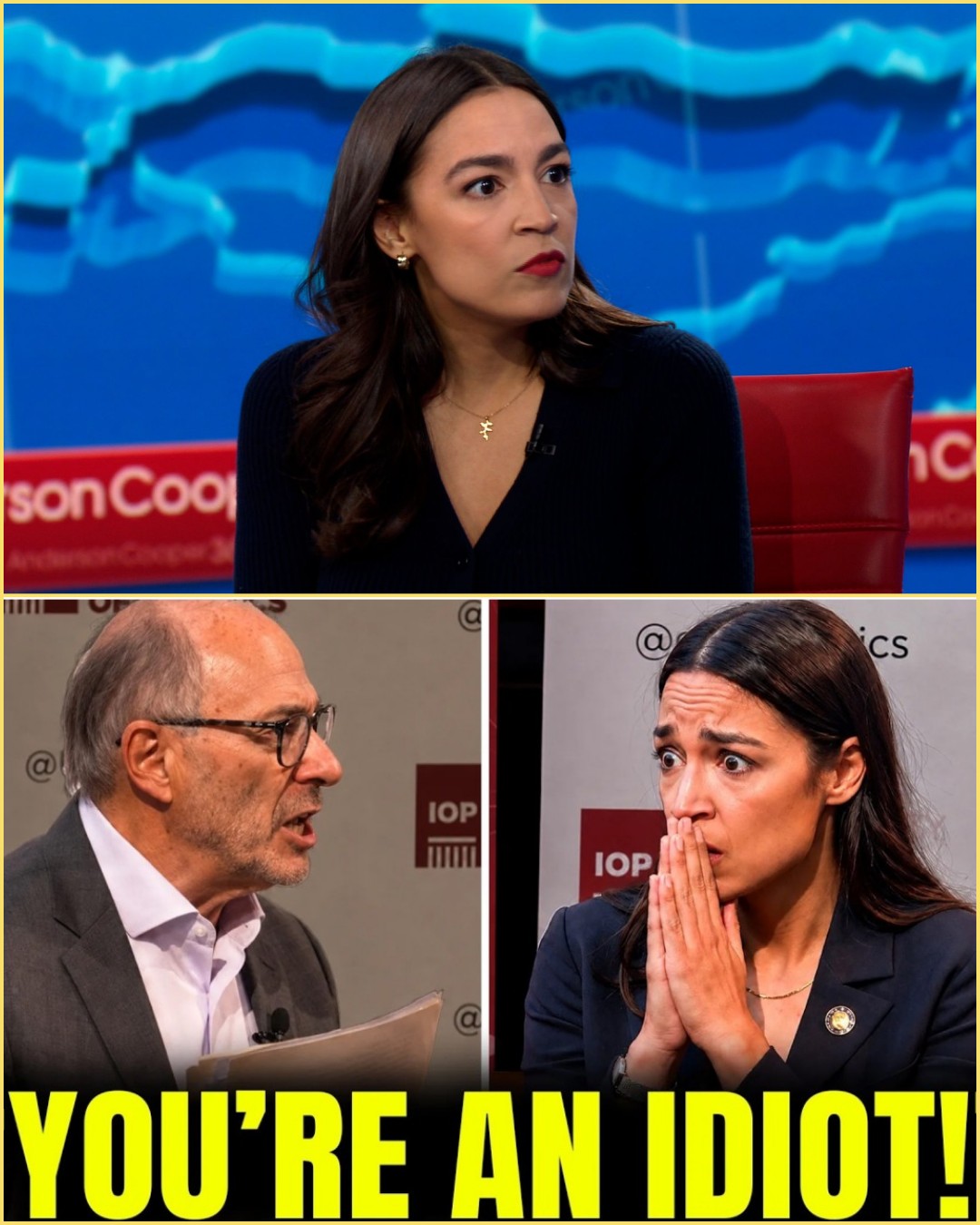

Alexandria Ocasio-Cortez has built her political identity around confidence, energy, and unapologetic progressive messaging. But during one recent interview discussing billionaires, capitalism, and American democracy, critics argue that confidence turned into overreach as the conversation spiraled into one of the most widely mocked political moments of her career.
The controversy began when AOC made a familiar progressive argument about wealth inequality. “There’s a certain level of wealth and accumulation that is unearned,” she stated confidently before arguing that nobody can truly “earn” a billion dollars.
The statement immediately reignited a debate that has followed her for years. Supporters praised the comment as a moral critique of extreme wealth concentration in modern America, arguing that billionaires often benefit from systems built on exploitation, tax loopholes, and economic imbalance.
Critics, however, heard something very different. To them, the comment sounded less like criticism of corruption and more like condemnation of extraordinary success itself.
That distinction became the center of the backlash. Because for many Americans, billionaires symbolize innovation, entrepreneurship, and ambition rather than automatic exploitation.

Critics quickly pointed to figures like Jeff Bezos, Mark Zuckerberg, Oprah Winfrey, Michael Jordan, and Mark Cuban — individuals who built massive businesses, brands, and industries from relatively ordinary beginnings.
The deeper issue, according to opponents, was not taxation or policy. It was the implication that exceptional success itself must be morally suspicious.
And then the interview became even more controversial. Attempting to connect modern progressive politics with America’s revolutionary origins, AOC argued that the American Revolution itself represented a revolt against concentrated wealth and power.
According to her framing, the Founding Fathers rebelled against what she described as the “billionaires of their time.”
That was the moment social media exploded. Critics immediately pointed out that many of the Founding Fathers were themselves wealthy landowners, merchants, and members of the colonial elite.
George Washington owned enormous amounts of land. Thomas Jefferson came from privilege. John Hancock was wealthy long before independence.
The Revolution, critics argued, was not a socialist uprising against wealth itself. It was a rebellion against monarchy, inherited political control, and taxation without representation.
That distinction became politically devastating because opponents accused AOC of trying to retrofit modern class-struggle ideology onto American history.
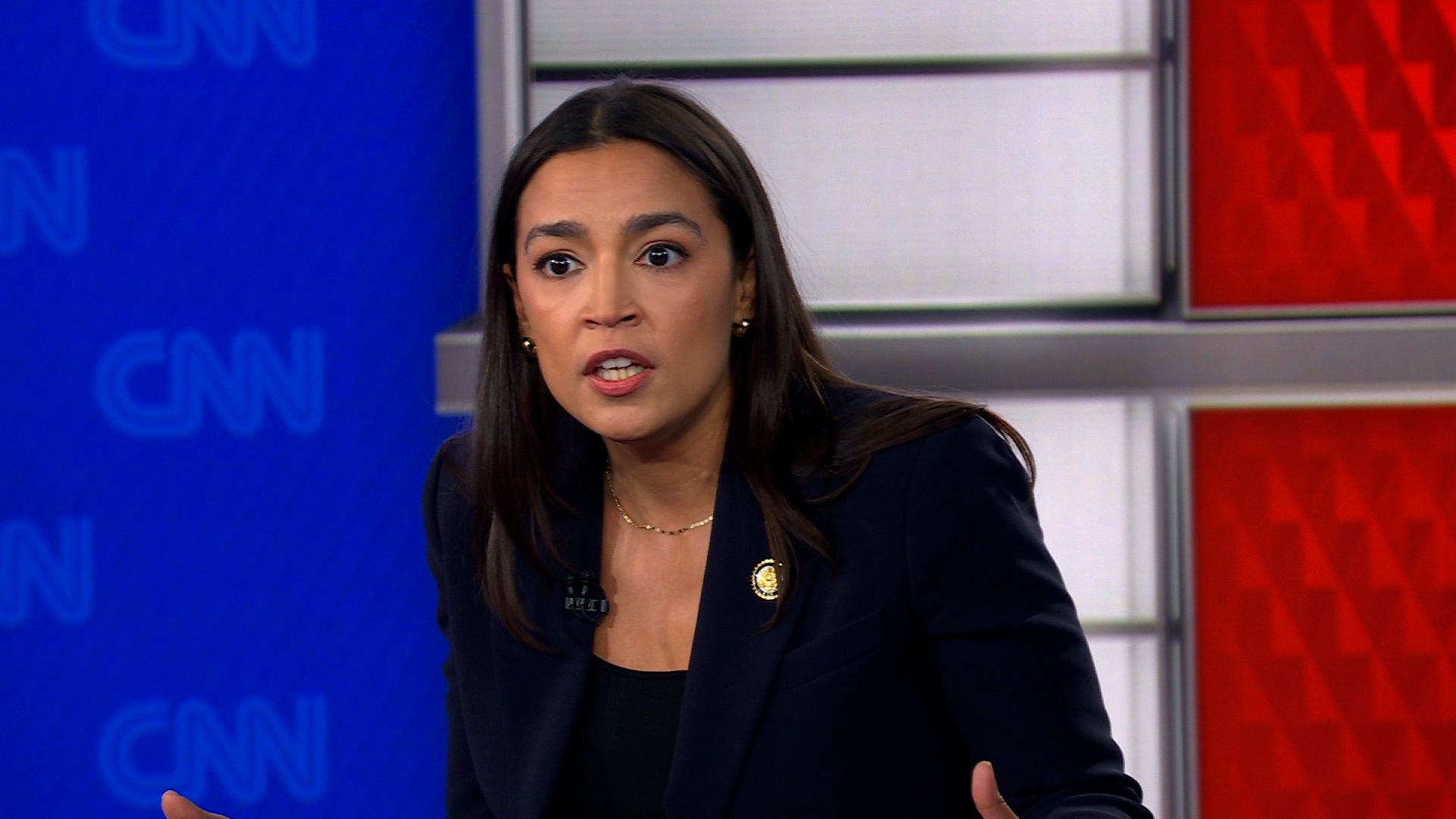
Even commentators sympathetic to progressive economic ideas appeared uncomfortable with portions of the argument. At one point during the interview, longtime Democratic strategist David Axelrod subtly attempted to redirect the conversation, gently suggesting that the Founders likely did not see themselves as anti-wealth revolutionaries in the modern progressive sense.
Observers online immediately noticed the tension. Many viewers argued that the interview’s most uncomfortable moments came not from aggressive criticism but from interviewers quietly trying to prevent the conversation from collapsing completely.
But the discussion did not stop there. The interview eventually shifted toward democracy, constitutional structure, and political power in America.
While discussing court decisions and redistricting controversies, AOC argued that ultimate political authority should belong to “the people” through elections.
Again, critics reacted instantly. Opponents pointed out that the United States was intentionally designed as a constitutional republic rather than a pure democracy.
The Founders feared unrestricted majority rule and built systems specifically intended to slow political power down through checks, balances, federalism, the Electoral College, the Senate, and constitutional protections.

James Madison himself warned repeatedly about the dangers of factional majorities overwhelming minority rights. For critics, this created another major problem in AOC’s argument.
Because while she framed judicial intervention against certain electoral outcomes as anti-democratic, opponents argued progressives have historically celebrated courts overturning policies they opposed politically, including laws involving immigration, civil rights, and marriage equality.
That contradiction fueled accusations that her definition of democracy changes depending on whether the outcome benefits progressive politics.
As the interview continued, critics argued a larger ideological pattern became visible. According to opponents, nearly every issue discussed eventually returned to the same framework: wealthy versus oppressed, elites versus workers, power versus marginalized groups.
Supporters see that framework as an honest analysis of structural inequality in modern society. Critics, however, argue it reduces complex historical and political realities into simplistic moral narratives where success automatically becomes suspect and every institution is interpreted through class struggle.
The controversy deepened further after AOC discussed democracy and Black American political history. She argued that Black Americans played a defining role in expanding democratic participation and rights in the United States.
Supporters praised the point as historically accurate recognition of the Civil Rights Movement’s transformative role in American political development.
But critics again accused her of reframing American history too narrowly through ideological lenses. They argued the Constitution was never intended to create unrestricted majoritarian democracy and that America’s system was intentionally designed with structural limits on direct popular rule from the very beginning.
At that point, the interview stopped feeling like a simple policy debate. Instead, it evolved into something much larger: a philosophical battle over the meaning of America itself.
One side viewed concentrated wealth as evidence of systemic imbalance and believed democracy should evolve toward broader economic fairness and inclusion.
The other side viewed AOC’s rhetoric as increasingly hostile toward excellence, ambition, individual success, and constitutional restraint.
And that cultural divide became impossible to ignore. Critics argued that the interview reflected a broader progressive mindset where competition, hierarchy, and exceptional achievement are increasingly treated as morally problematic rather than aspirational.
Supporters countered that questioning concentrated wealth and unequal systems is not hatred of success but necessary accountability in a society where economic gaps continue growing wider.
But online, the political damage was already spreading rapidly. Clips of AOC confidently declaring that billionaires cannot “earn” their wealth circulated everywhere.
Segments discussing the Founding Fathers triggered especially intense backlash, with commentators accusing her of misunderstanding basic American history.
Memes, reaction videos, and political commentary flooded social media within hours. What made the reaction especially brutal was not simply disagreement with her policies.
It was the perception that she spoke with absolute certainty while making historical comparisons many viewers considered deeply flawed.
That perception transformed the interview from an ordinary political discussion into a viral spectacle. By the end, even some commentators who normally support progressive economic reform admitted the messaging had become politically dangerous.
Because once the argument shifted from regulating wealth to questioning whether extraordinary success can ever be legitimate at all, the conversation stopped sounding like mainstream economic reform to many Americans.
Instead, critics argued it began sounding like ideological hostility toward the foundations of capitalism itself.
And whether supporters view that criticism as fair or exaggerated, one reality became impossible to deny.
The interview reignited one of the deepest political divides in modern America: Whether extreme wealth represents innovation and opportunity — or proof the system itself has fundamentally broken down.