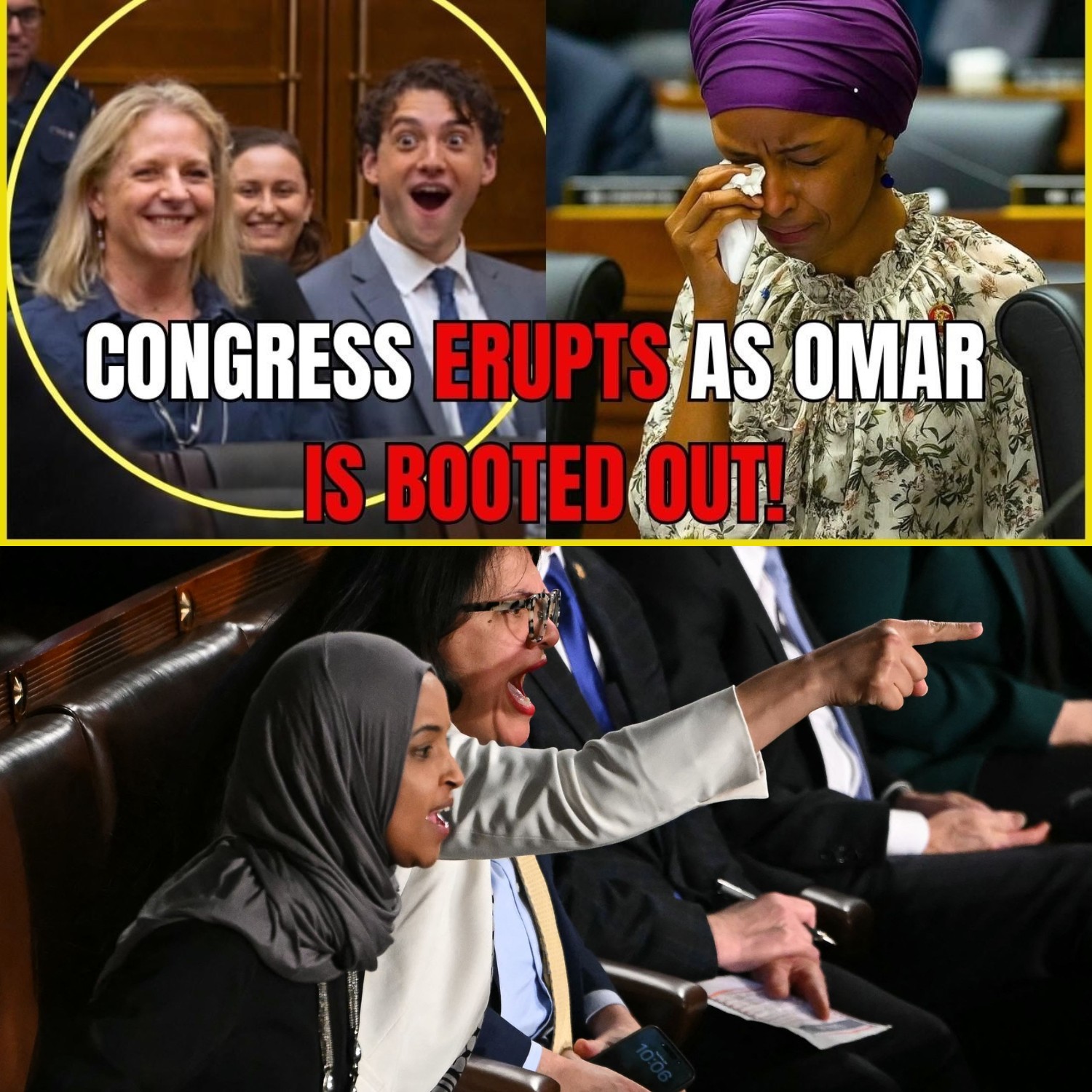

When Rep. Ilhan Omar was removed from the House Foreign Affairs Committee in February 2023, the vote did more than strip one lawmaker of a high-profile assignment. It reopened a broader national argument about political retaliation in Congress, the limits of punishment for past remarks, and the way race, religion, and identity shape public reaction to disciplinary actions on Capitol Hill.
The transcript presented here captures that moment through a sharply partisan lens. It frames Omar’s removal as long-overdue accountability, describes the Democratic response as theatrical overreaction, and folds in older allegations about campaign finance and taxes to argue that the controversy was never really about committee precedent alone. But the historical record shows a more layered picture: House Republicans did remove Omar from the Foreign Affairs Committee on a near party-line vote in 2023, and they explicitly linked the move to past comments about Israel that had drawn bipartisan condemnation and to the precedent Democrats had set when they removed two Republican members from committee assignments in the previous Congress. At the same time, Democrats and Omar herself argued the vote was driven less by principle than by partisan payback and bias toward a Black Muslim immigrant woman who had become a symbol in America’s culture wars.
That tension is what made the moment so politically explosive. Omar was not expelled from Congress, arrested, or stripped of her elected office. She remained a sitting member of the House with full voting power. But committee assignments matter in Congress because they determine influence, subject-matter expertise, public visibility, and access to consequential foreign-policy debates. For a member like Omar, whose public identity was closely tied to international issues, being removed from Foreign Affairs carried both practical and symbolic force.
Reuters reported on February 2, 2023, that the Republican-led House voted 218–211 to remove Omar from the committee, with Republicans citing remarks from 2019 that had been widely condemned as antisemitic and for which Omar had later apologized. Reuters also noted that the vote came two years after Democrats removed two Republicans from committee assignments, underscoring that this was not an isolated act of discipline but part of an escalating cycle of congressional reprisals.
That context matters because the transcript is built around a central Republican defense: Democrats changed the rules first. Kevin McCarthy and other GOP leaders argued that if Democrats could remove members such as Marjorie Taylor Greene and Paul Gosar over conduct they deemed unacceptable, Republicans were justified in doing the same when they took control of the House. Associated Press reporting from the same period showed McCarthy openly framing other committee removals—such as those involving Adam Schiff and Eric Swalwell—as part of a broader reshaping of committee assignments after the Republican takeover.
From that perspective, Omar’s removal was less an extraordinary punishment than the logical continuation of a new congressional norm. Once one majority began using committee assignments as a disciplinary tool, the other was likely to follow. The transcript leans heavily into that argument, portraying the Democratic outrage as selective and ahistorical. And there is some factual basis for saying the Omar vote fit into a broader retaliation cycle. Reuters explicitly described the action as taking place “two years after Democrats removed two Republicans from committee assignments,” and major coverage at the time consistently connected the vote to that precedent.
But that does not settle whether the move was justified.
For Republicans, the case against Omar centered on her past statements about Israel and Jewish influence in American politics. Those remarks had already drawn sharp criticism years earlier and had prompted a House vote condemning antisemitism, Islamophobia, racism, and other forms of bigotry. In the GOP argument, someone with that history should not sit on the Foreign Affairs Committee. That was the formal rationale. Reuters summarized it directly: Republicans cited remarks they said were antisemitic and anti-American.
For Democrats, however, the Omar vote was not meaningfully comparable to earlier removals of Republicans. They argued that Omar had apologized for her comments, that Republican members with their own histories of incendiary rhetoric had faced no comparable consequences from their party, and that the focus on Omar could not be separated from the fact that she is a Muslim refugee, one of the first two Muslim women elected to Congress, and a frequent target of right-wing media attacks. Vanity Fair’s contemporaneous coverage captured that Democratic argument clearly, describing the vote as hypocritical retaliation and noting the view among Omar’s defenders that Republicans had tolerated equally inflammatory or worse conduct from their own side.
That is why the House-floor response was so intense. In the transcript, Democratic members frame the decision not simply as committee politics but as part of a pattern of racism, Islamophobia, and the targeting of women of color. To Republicans and conservative commentators, that sounded like melodrama designed to evade substantive criticism. To Omar’s allies, it reflected a real pattern in which criticism of Omar was often entwined with hostility to her identity. Both readings existed at the same time, and neither can be understood without the broader history of the American debate over Omar herself.
Long before the 2023 committee vote, Omar had been one of the most polarizing members of Congress. She was celebrated by supporters as a groundbreaking voice on foreign policy, immigration, and progressive politics, and demonized by critics as anti-American, anti-Israel, and perpetually ungrateful to the country that gave her refuge. The transcript reproduces that latter line almost word for word, arguing that America “fed,” “clothed,” “educated,” and elevated Omar, only for her to repay the country with criticism. That rhetoric has circulated for years and has helped turn Omar into a symbolic figure far beyond her legislative role. While such arguments are political opinion rather than verifiable fact claims, they help explain why every dispute involving Omar tends to become a referendum on nationalism, assimilation, and who gets to criticize the United States without being branded disloyal.
The transcript also revives a series of older allegations about Omar’s taxes, campaign spending, and ethics. Some of those claims refer to real events, but the way they are presented in the video collapses allegations, investigations, and proven violations into one moral indictment. The clearest established fact here is that the Minnesota Campaign Finance and Public Disclosure Board did find that Omar had violated state campaign finance rules while she was a state legislator. In 2019, the board ordered her to reimburse her campaign for improper expenditures and pay a civil penalty. The Star Tribune reported that the board required Omar to personally reimburse $3,469.23 and pay a $500 penalty for using campaign funds for purposes not permitted by state law.
That is real and relevant. But it is also narrower than the transcript suggests.
The transcript goes further, invoking tax-fraud suspicions, kickbacks, improper filing status, and ethics referrals as though they were resolved findings. What is better supported by the record is that Minnesota state Rep. Steve Drazkowski and others publicly sought investigations into Omar in 2019. The Associated Press reported in July 2019 that a Minnesota state legislator and a conservative group announced they were seeking ethics investigations into Omar over a range of allegations. That means the calls for investigation were real; it does not mean the allegations were proven.
That distinction is crucial for any serious article. A request for an inquiry is not the same thing as a finding of wrongdoing. In the years since, Omar has remained a major national figure, continued to serve in Congress, and continued to face recurring political attacks, but the transcript’s sweeping presentation of tax and ethics accusations does not map neatly onto a record of adjudicated offenses beyond the Minnesota campaign finance matter.
This matters because one of the central rhetorical moves in the transcript is to say that Democrats responded to Omar’s removal by talking about racism and Islamophobia instead of addressing “substantive allegations.” But in reality, the committee removal vote itself was not formally about tax filings or campaign finance. It was about her suitability for Foreign Affairs in light of past remarks and, more broadly, about who gets punished by a congressional majority. Pulling in a long list of unrelated accusations makes the speech more forceful as polemic, but it also muddies the actual grounds of the House action. Reuters’ reporting on the vote did not center tax or campaign-finance issues; it centered Omar’s past comments and the retaliatory dynamic between the parties.
That brings us back to the real significance of the episode: precedent.
One of the most important lines in the transcript comes late, when it asks whether Congress has entered a permanent era of payback politics in which every power shift produces a committee purge. That is not just partisan flourish. It is the most serious institutional question raised by the Omar vote. If committee assignments become routine weapons of majority revenge, then every future Congress may be tempted to use them not only to discipline extraordinary conduct but to satisfy political constituencies and settle old scores.
The evidence from 2021 through 2023 suggested that this risk was already materializing. Democrats removed Greene and Gosar from committee roles. Republicans responded by targeting Omar and, through separate mechanisms, Schiff and Swalwell. AP’s reporting on McCarthy’s decisions over the intelligence committee and Reuters’ reporting on Omar’s removal both show a clear pattern: committee assignment fights had moved from rare exceptions to major partisan battlegrounds.
That shift has consequences beyond symbolism. Committees are where policy expertise is developed and where legislators do much of their most consequential work. When committee access becomes a tool of partisan punishment, Congress loses something institutional even when both sides can make a case that the other started it.
At the same time, pretending the Omar vote was just dry procedural housekeeping would also be misleading. It was a deliberately visible political act. Omar was not some obscure member quietly reassigned behind the scenes. She was one of the most recognizable progressive lawmakers in the country, and removing her from Foreign Affairs sent a message not just to her but to the broader electorate. For Republicans, it signaled seriousness about Israel, foreign policy, and accountability. For Democrats, it signaled that identity and dissent were being punished under the cover of procedural precedent. That symbolic dimension is why the speeches, tears, denunciations, and viral commentary followed so quickly.
There is also a media lesson embedded in the transcript. The narration repeatedly contrasts “normal people” with elite outrage, suggesting that ordinary viewers saw the Democratic response as absurd. That kind of framing is powerful because it simplifies the scene into common sense versus performance. But the actual public reaction was not so uniform. Some Americans did see the response as exaggerated. Others saw the vote itself as discriminatory or petty. Still others viewed the entire spectacle as proof that Congress had become more interested in symbolic conflict than governance. The viral nature of the clip reflected polarization, not consensus.
In retrospect, Omar’s removal now looks like one moment in a longer story rather than a singular rupture. She was not politically finished by the vote. The Associated Press reported just months ago on another House effort involving Omar, showing that she remains a recurring focal point for Republican-led attempts at censure or committee-related discipline. That continuity suggests the 2023 vote did not resolve the broader argument about Omar; it entrenched it.
So what should be concluded from the episode?
First, the basic event is clear: House Republicans removed Ilhan Omar from the Foreign Affairs Committee in February 2023, citing past remarks and operating in a retaliatory environment partly shaped by earlier Democratic removals of Republican members from committees.
Second, the transcript’s broader effort to present Omar as engulfed in proven tax and ethics scandal is overstated. There was a real Minnesota campaign finance violation and there were real calls for investigations, but those do not amount to all the conclusions the commentary implies.
Third, the Democratic response cannot be understood only as a cynical “race card” play or only as principled resistance to discrimination. It was both a defense of an ally and a genuine expression of a belief—shared by many on the left—that Omar is judged through a harsher lens because of her religion, race, immigration story, and public profile. The political conflict around her has always been substantive and identity-laden at the same time.
And finally, the larger institutional question remains unsettled. Congress has moved into an era where committee assignments can be used as instruments of partisan discipline in ways that both sides once warned against when they were in the minority. If that norm holds, Omar’s removal will be remembered not only as a fight about one controversial lawmaker, but as part of the period when committee politics became just another front in Washington’s permanent war of reciprocal punishment.
That is the deeper story beneath the outrage in the transcript. Ilhan Omar lost a committee seat. Republicans claimed accountability. Democrats claimed bigotry and retaliation. Both sides had facts they could point to, and both sides wrapped those facts in a much larger story about what America is becoming. The vote itself lasted only a moment. The precedent it reinforced is still unfolding.