
The 2024 Women’s National Basketball Association (WNBA) season will forever be remembered as the inflection point when women’s professional basketball transcended its niche sports status and collided head-first with mainstream global culture. At the epicenter of this seismic shift was a single individual: Caitlin Clark, the transcendent rookie guard for the Indiana Fever. Fresh off an iconic collegiate career at the University of Iowa, where she shattered all-time scoring records and captivated millions, Clark arrived in the WNBA with an unprecedented wave of public expectation, corporate backing, and cultural momentum. For a league that had spent nearly three decades fighting for mainstream media visibility, sustainable profitability, and prime-time broadcast real estate, the arrival of the “Caitlin Clark Effect” seemed to be the ultimate financial and cultural savior.
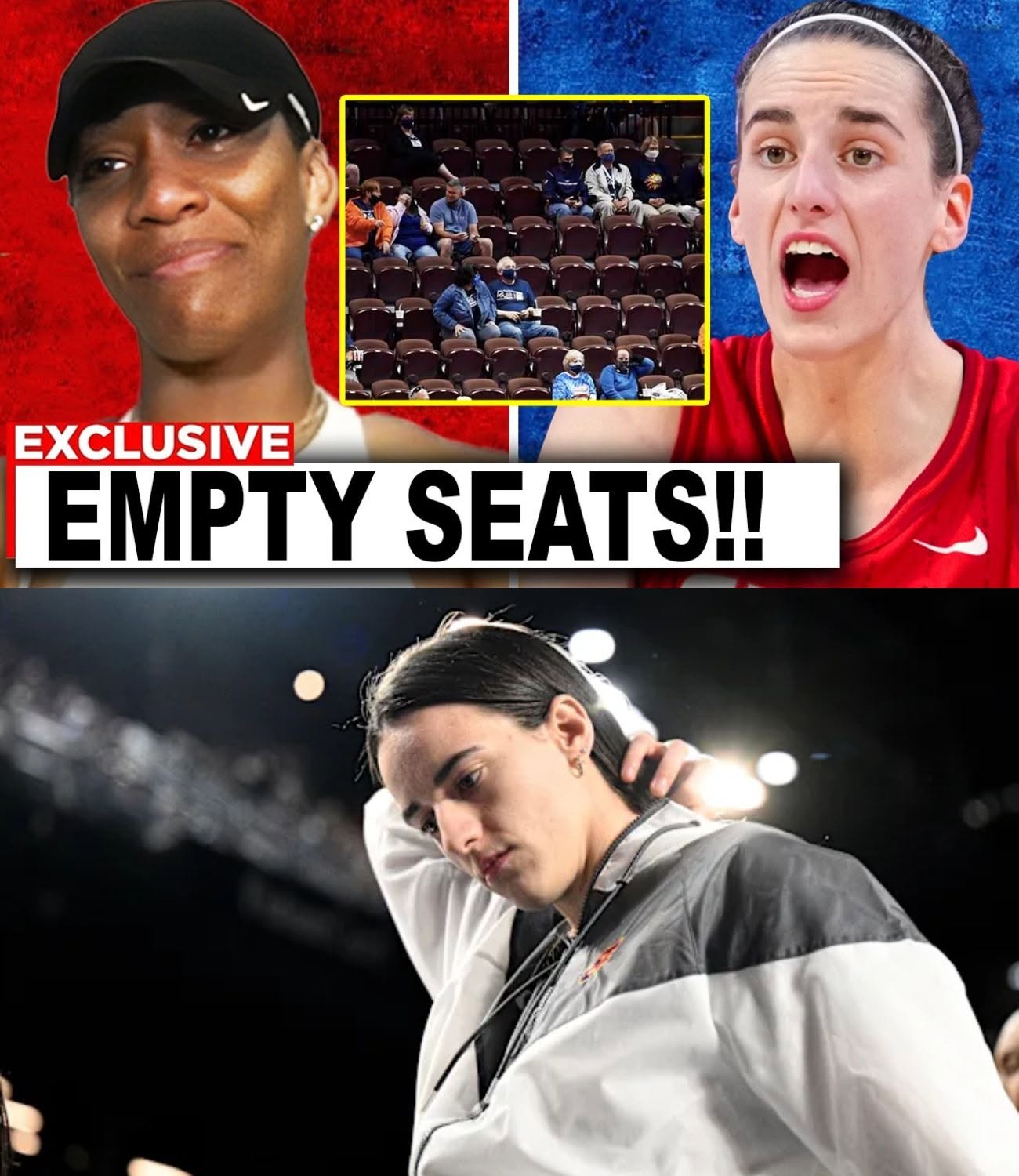
Yet, as the Indiana Fever’s postseason run came to a premature and abrupt end at the hands of the Connecticut Sun, the league was immediately forced to confront an uncomfortable, existential reality. The moment Clark exited the hardwood, a staggering economic and cultural vacuum opened up. Broadcast data immediately revealed a catastrophic plunge in television ratings. While the Indiana Fever’s first playoff match pulled in an astonishing, near-record audience of nearly 2 million viewers, concurrent and subsequent postseason matchups featuring other elite teams collapsed back down to a modest baseline of roughly 400,000 viewers. Even standard pre-game programming aired prior to Clark’s games outpaced the live game viewership of rival playoff series. This massive statistical disparity has sent shockwaves through the sports media landscape, exposing a fundamental vulnerability within the WNBA’s growth strategy: the league did not experience a uniform rise in popularity; rather, it experienced an unprecedented, hyper-fixated obsession with a single player.
To contextualize the sheer magnitude of Clark’s economic impact, one must look directly at the underlying metrics of viewership and ticketing trajectories. Prior to the 2024 season, the WNBA was already celebrating a period of healthy, organic development, boasting a 40% increase in viewership from 2022 to 2023. However, upon Clark’s formal entry into the professional ranks, that steady trajectory exploded into a breathtaking 400% surge in audience engagement. Sports business analysts quickly noted that if the WNBA had maintained its pre-Clark rate of growth, it would have taken until the year 2028 to achieve the audience metrics that the rookie single-handedly delivered in a matter of months. A similar narrative emerged within live event ticketing. In 2023, gate receipts climbed by a commendable 16% across the board, but the 2024 season witnessed a staggering 93% explosion in total ticket sales. Arenas across the United States were consistently packed to maximum capacity, with opposing franchises frequently relocating their games to massive NFL or high-capacity NBA venues just to accommodate the thousands of fans sporting No. 22 jerseys. Without Clark’s presence, mathematical models indicate the league would not have touched these ticketing milestones until approximately 2030.
However, this rapid influx of capital and attention brought an intense, microscopic level of scrutiny that exposed deep-seated cultural and systemic friction within the women’s basketball ecosystem. Throughout the season, a highly visible, polarizing narrative emerged regarding the treatment of the rookie sensation by both veteran peers and legacy sports media commentators. Observers, fans, and certain media analysts began to point out an underlying current of professional jealousy, resentment, and institutional hostility aimed at Clark. On the court, the physical play directed toward her frequently crossed the boundary of standard professional intensity, occasionally veering into flagrant, highly publicized altercations that left fans questioning the protection protocols of the league’s officiating crews. Prominent media personalities, including ESPN’s Molly Qerim and Monica McNutt, routinely found themselves locked in fiery debates regarding the true “face of the league,” balancing the recognition of Clark’s undeniable commercial dominance against the legacy contributions of long-standing veteran athletes who had built the foundation of the WNBA over decades.

This cultural friction was further compounded by the grueling, unprecedented physical toll exacted upon Clark herself. The young guard endured a continuous, unbroken stretch of competitive basketball that mirrored the exhausting regular-season schedule of an NBA veteran. She successfully transitioned directly from a deeply stressful, high-stakes run to the NCAA National Championship game straight into the immediate start of WNBA training camps, followed by a relentless 40-game regular season and the subsequent pressure of a postseason debut. By the time the Fever faced the Connecticut Sun in their final elimination matchup, Clark was visibly operating on sheer willpower and competitive instinct, running on empty after months of carrying the weight of a franchise and the commercial expectations of an entire sports league. Despite these exhausting circumstances, she put forth a heroic final performance, logging 25 points and 9 assists, attempting to put her team on her back before the Fever’s lack of veteran depth and defensive consistency ultimately sealed their postseason fate.
In the wake of her elimination, Clark made the highly calculated decision to step away entirely from the game for the off-season, opting out of profitable European winter leagues and the domestic three-on-three Unrivaled circuit to prioritize her physical health, mental well-being, and long-term recovery. This impending 200-day hiatus where Clark will remain completely off the basketball court presents an immediate, severe operational challenge for WNBA executives and network broadcast partners. For the remainder of the postseason, the league must figure out how to maintain its newly acquired, highly fickle fan base during a period where its central attraction is completely absent. The immediate drop-off in television viewership indicates that a vast segment of the new audience consists of “Caitlin Clark fans” rather than holistic followers of the WNBA, suggesting that when she changes the channel or steps off the court, the audience leaves right along with her.
Ultimately, the 2024 season has proved that Caitlin Clark is far more than a flash-in-the-pan rookie; she is a transformative, generational icon whose star power carries unprecedented economic gravity. Yet, the current viewership crisis serves as a sobering warning sign for the sports industry. True, sustainable growth cannot be built upon the shoulders of a single individual, nor can a league thrive commercially when an undercurrent of systemic friction threatens to alienate the very audiences driving its financial evolution. As the WNBA navigates this quiet, post-Clark interim period, all eyes remain firmly fixed on the horizon, eagerly anticipating a historic return that promises to once again alter the landscape of American sports.