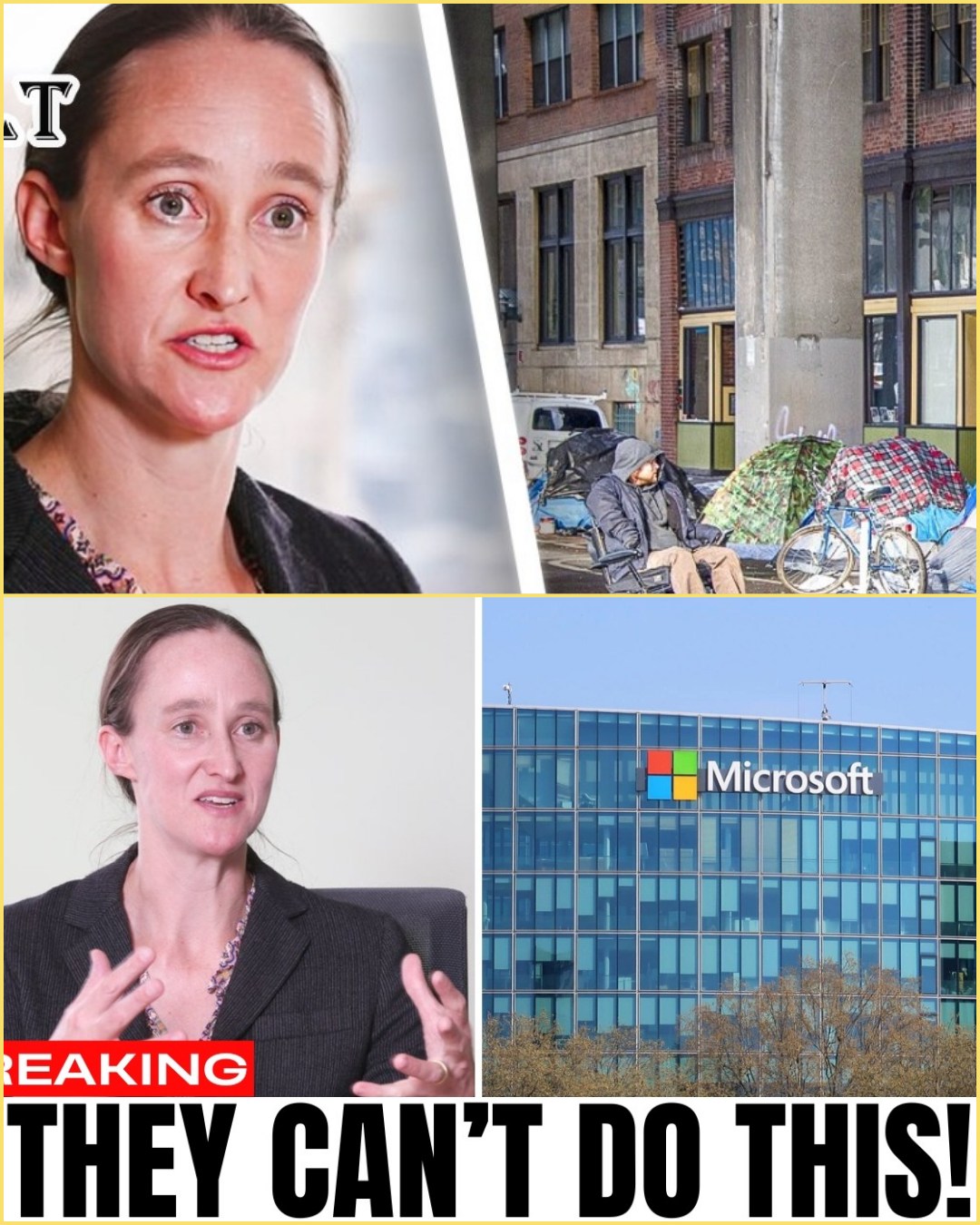

SEATTLE’S TECH EMPIRE IS CRUMBLING – THE SHOCKING STORY OF LAYOFFS, CRASHING PRICES, AND RISKY POLICY
Seattle, once the proud home of Amazon, Microsoft, and Boeing, is facing a severe storm that few saw coming.
The city that built its reputation and tax base now on explosive tech growth finds itself battling a painful combination of massive layoffs, plunging property values, and an office vacancy crisis that refuses to fade.
What was supposed to be a temporary correction after the pandemic has turned into something far more serious, with thousands of jobs disappearing and entire neighborhoods feeling the pain.
Downtown Seattle tells the most dramatic story.

Office vacancy rates have skyrocketed to 36.
5 percent in early 2026, more than four times higher than pre-pandemic levels.
More than one out of every three office spaces now sits dark and empty.
Across 2025, tenants walked away from 2.
3 million square feet of office space, while not a single new office building opened downtown.
The financial damage is staggering.
King County Assessor John Wilson reported that prestigious towers lost enormous value between 2022 and 2025.
Amazon’s Doppler Tower and Meeting Center surrendered 62 percent of its assessed value.
The Day One Tower and famous Spheres dropped 59 percent.
Other landmark buildings saw losses between 53 and 56 percent.
In total, downtown’s most valuable office towers have shed 3.
7 billion dollars in assessed value.
This collapse in commercial real estate is quietly hitting everyday homes.
Commercial properties used to make up 35 percent of Seattle’s tax base.
That share has now fallen to just 17 percent.
As big office buildings carry less of the load, regular homeowners are forced to shoulder more through higher property taxes.
It is a hidden tax increase that many residents are only beginning to feel.
The pain extends to major developers.
Martin Selig, the 88-year-old force behind the Columbia Center and Seattle’s largest independent office landlord, saw his company default on a 240 million dollar loan in 2025.
They handed over a nearly empty 400 Westlake building and the Federal Reserve building to lenders.
Another 379 million dollars in loans on nine properties slides into receivership.
The company laid off 86 employees.
Historic buildings like the Dexter Horton Building sold for just one quarter of their 2019 price, while the iconic Smith Tower changed hands at what many called a bargain basement figure.
With 13 major office loans worth one billion dollars coming due by the end of 2025, refinancing has become nearly impossible.
At the heart of this crisis are the relentless tech layoffs.
Amazon announced 14,000 global corporate cuts in October 2025, with more than 2,300 jobs eliminated in Seattle alone.
Reuters suggested the total could reach 30,000 by early 2026.
Microsoft, whose employees live and spend heavily in the city, cut more than 3,200 Washington jobs since May 2025.
Expedia slashed hundreds in Seattle.
T-Mobile eliminated over 1,000 positions.
Oracle, Meta, Redfin, F5 Networks, and Smartsheet all joined the wave.
In total, more than 14,850 workers in King County received layoff notices in 2025, a 72 percent jump from the previous year.
Another 4,798 were affected in early 2026.
Washington ranked second nationally in tech layoffs, behind only California.
Executives are open about the main driver: artificial intelligence.
Microsoft CEO Satya Nadella admitted that AI now writes roughly 20 to 30 percent of the company’s code.
Oracle’s co-CEO explained that AI tools allow smaller teams to deliver more work faster.
Companies are becoming leaner, faster, and less dependent on large human workforces.
Making the situation even more difficult are rising taxes.
Seattle’s Jumpstart payroll tax, along with new measures approved by voters, has increased the burden on high-paying employers.
A new 5 percent tax on employees earning over one million dollars was passed, and business and occupation taxes were raised on large corporations.
At the state level, Governor Bob Ferguson signed 12.
5 billion dollars in tax increases, including higher capital gains and estate taxes, plus a planned 9.
9 percent income tax on earnings above one million dollars starting in 2028.
Many business leaders are openly considering leaving the state.
Amazon has already shifted thousands of workers from Seattle to Bellevue, costing the city millions in lost revenue.
Jeff Bezos moved to Florida, a decision estimated to cost Washington 610 million dollars in future capital gains taxes.
The housing market clearly reflects the turmoil.
Seattle’s median home sale price fell to 825,000 dollars in April 2026, down 6.
4 percent from the year before.
Inventory jumped 36 percent, days on market more than doubled, and over 28 percent of homes had price reductions.
The condo segment suffers even worse.
In Capitol Hill and the Central District, condo prices dropped 30.
5 percent in a single year.
Citywide median condo prices fell sharply, reaching just 445,000 dollars by January 2026 in traditional buildings.
Rental concessions are at record levels, with nearly 40 percent of listings offering discounts.
Multifamily construction has slowed dramatically.
People are voting with their feet.
Seattle ranks among the top cities for outbound moves.
Washington State has seen net domestic out-migration from the Seattle metro for four straight years, with many headings to North Carolina, Florida, and Tennessee.
Meanwhile, businesses continue shifting operations to Bellevue, where office vacancy is significantly lower.
In the middle of this economic pressure, Seattle voters made a bold political choice.
In November 2025, they elected Katie Wilson, a self-described Democratic socialist with no prior elected experience, as mayor.
She narrowly defeated the incumbent by less than one percent.
Voters also shifted the city council back toward progressive leadership.
Wilson had questioned during the campaign whether it would be bad if Amazon simply slowed down.
Many see this as a signal that the city is doubling down on progressive policies even as companies pull back.
Yet there are some positive signals.
Homicides dropped 36 percent in 2025 to the lowest level in years.
Overall crime fell 18 percent.
The police department hired 167 new officers and saw the end of a long federal consent decree.
A few big leases, including one from JP Morgan Chase and another from OpenAI in nearby Bellevue, brought small hope to the office market.
The upcoming 2026 FIFA World Cup is expected to bring nearly one billion dollars in economic activity to the region.
Still, the challenges remain massive.
More than 11,000 tech workers lost jobs in Washington between May 2025 and April 2026.
The commercial tax base continues to shrink.
AI-driven efficiency gains suggest fewer jobs in the future.
And taxes keep climbing even as businesses look for friendlier environments.
Seattle is not Detroit.
Single-family home prices have softened but not collapsed.
The city still possesses enormous talent, global brand power, and upcoming events that could provide a boost.
However, the office market crisis, condo price drops, and corporate flight across Lake Washington paint a picture of real vulnerability.
The new Wilson administration now faces the difficult task of reversing the momentum while navigating another wave of AI disruption and ongoing legal battles over new taxes.
The story of Seattle in 2026 is still being written.
Whether this becomes a painful but temporary correction or the beginning of a longer decline depends heavily on the decisions made in the coming months.
For now, uncertainty hangs heavily over the city that once symbolized unstoppable tech ambition.