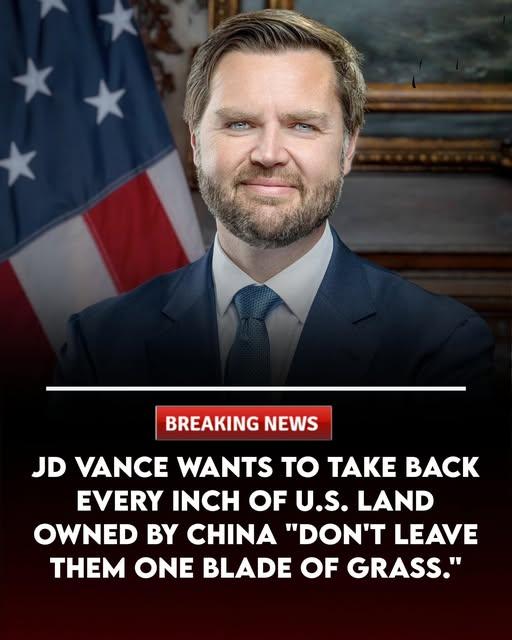

In an increasingly complex world of geopolitical tensions and national security concerns, Vice President JD Vance has sparked a nationwide debate with his statement on reclaiming U.S. land from Chinese-linked entities. Vance’s strong stance, declaring that the U.S. should not leave “one blade of grass” to China, has quickly become a topic of intense discussion, with both fervent supporters and vocal critics.

This article will explore the intricacies of Vance’s proposal, its implications for national security, the U.S. economy, and its potential to shift the landscape of American property ownership. As China continues to purchase vast tracts of land in the U.S., including farmland and properties near military bases, the question arises: should the U.S. government step in to protect its sovereignty and resources, or does such action risk fostering xenophobia and harming investor confidence?
The Rising Influence of China on U.S. Soil
China’s growing presence in the United States, especially in terms of land ownership, has raised alarm bells in both political and security circles. According to recent estimates, Chinese entities now own over 265,000 acres of American farmland, alongside properties near key military bases. These purchases have largely gone under the radar for many Americans, but with rising tensions between the U.S. and China, the issue has begun to capture public attention.
What’s even more concerning is the type of land being purchased. Farmland, energy-rich resources, and properties near military installations are all strategic assets that could be used to exert influence over the U.S. in times of conflict. The growing economic interdependence between China and the U.S. has prompted fears that these acquisitions could ultimately benefit China’s geopolitical goals, making it a serious issue of national security.
JD Vance’s Call to Reclaim U.S. Land
JD Vance’s remarks hit a nerve in the ongoing discussion about foreign ownership of American assets. By asserting that the U.S. should “not leave China one blade of grass,” Vance is taking a hardline approach to address the growing influence of foreign entities, particularly China, over U.S. land. His statement is grounded in the belief that no foreign adversary should control valuable U.S. resources, especially land that is integral to the country’s national security.
The implications of this are far-reaching. Vance’s call for reclaiming land from Chinese-linked entities would essentially mean forcing the sale or nationalization of properties and farmland currently held by Chinese nationals or companies. While this might seem extreme to some, it is part of a larger movement that includes legislation aimed at restricting foreign ownership of agricultural land.
The Legal Landscape: Cracking Down on Chinese Land Acquisitions
Vance’s proposal comes on the heels of recent state and federal efforts to curb foreign ownership of U.S. land, particularly agricultural land. Several U.S. states, including North Dakota, Texas, and Florida, have passed laws designed to limit or block foreign purchases of agricultural land. These laws have been fueled by concerns over national security, as foreign ownership of farmland near military installations or in key agricultural regions could potentially give adversaries like China undue influence.
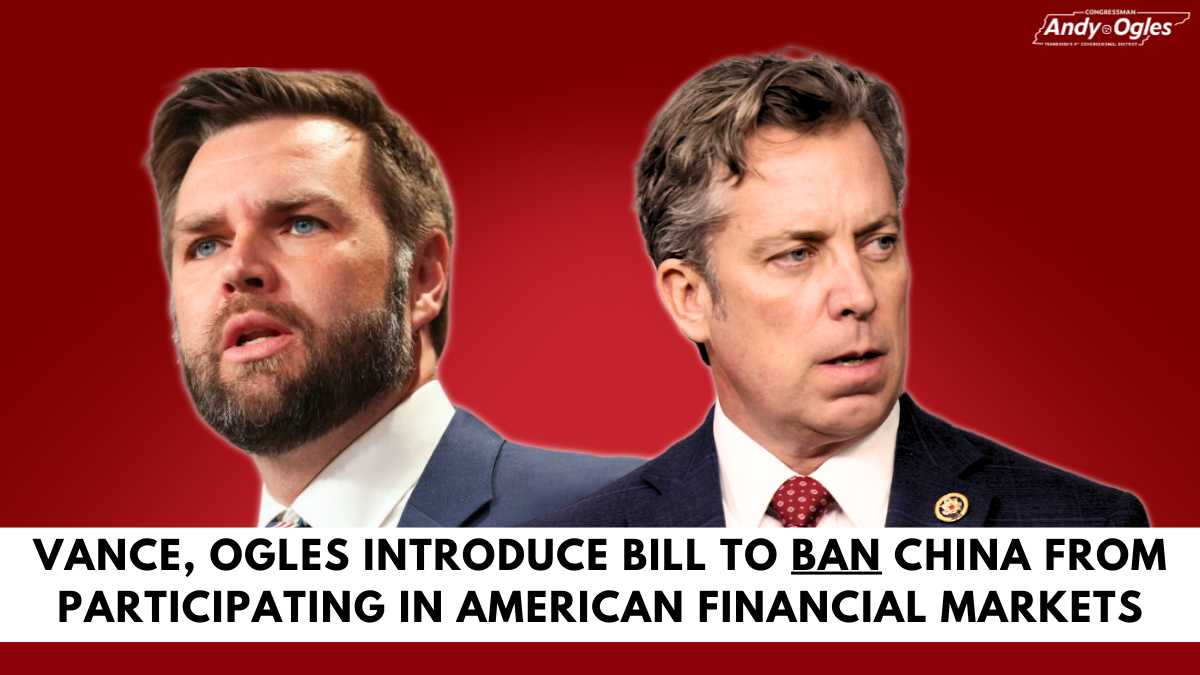
At the federal level, lawmakers have introduced bills aimed at restricting foreign entities, particularly Chinese firms, from acquiring U.S. farmland. These bills argue that the U.S. should retain control over its vital resources, as foreign control over agricultural production, food security, and military zones poses a threat to national interests.
However, the conversation around restricting foreign ownership is complex. Proponents argue that limiting foreign ownership, especially by adversaries like China, is a matter of national security. Critics, on the other hand, warn that such moves could spark xenophobia, hurt U.S. international relations, and discourage investment.
The Economic Impact: Will This Harm the U.S. Economy?
One of the strongest criticisms of JD Vance’s proposal is the potential economic backlash. Foreign investment in the U.S. — especially in real estate and agriculture — plays a key role in driving economic growth. Chinese entities have been significant players in the U.S. property market, purchasing both commercial and residential real estate. By banning or limiting Chinese land ownership, the U.S. could risk losing a substantial portion of this foreign investment, which has contributed to economic development and job creation.
Moreover, limiting foreign investment could send a signal to other international investors that the U.S. is not a welcoming place for foreign capital, potentially deterring investments in a wide range of industries, including technology, healthcare, and energy. The implications of such a shift could be felt in stock markets, industries dependent on foreign investments, and the U.S. dollar’s global standing.
National Security: A Greater Threat Than Economic Loss?
While economic factors certainly play a role in the decision to limit foreign land ownership, national security is at the heart of this debate. As tensions between the U.S. and China escalate, concerns over Chinese influence on U.S. soil have intensified. The U.S. government has historically been protective of sensitive military sites, ensuring that adversaries do not have access to crucial infrastructure that could potentially jeopardize national security.
Chinese-owned properties near military installations have become a particular point of contention. Critics argue that China’s proximity to these areas could provide them with intelligence advantages or even the ability to interfere with military operations. In a time of conflict, such access could be invaluable, leading to heightened calls for restricting Chinese land purchases in sensitive areas.
Furthermore, the U.S. is witnessing a rise in cyber espionage and intellectual property theft by Chinese entities, which has compounded concerns over foreign influence. When foreign adversaries control land near military sites or critical infrastructure, the risk of cyber attacks or physical sabotage increases, making national security a priority for many lawmakers.
The Global Perspective: Is This a Precedent for Other Nations?
While JD Vance’s proposal is a strong stance on national security, it also raises the question: Could other countries follow suit and begin restricting foreign ownership of land and property? Countries like Australia and Canada have already taken steps to limit foreign investments in agricultural land, citing concerns about national security and economic stability. As other nations grapple with rising foreign influence from countries like China, the U.S.’s approach could serve as a model for others to follow.
The growing trend of limiting foreign ownership of land could also shift global markets, impacting international trade and real estate investments. For China, which has been buying up significant portions of farmland worldwide, these new restrictions could limit its economic strategy and reshape its foreign policy priorities.
The Ethical Dilemma: Balancing Security and Xenophobia
One of the most significant ethical concerns surrounding the call to reclaim U.S. land from Chinese ownership is the potential for xenophobia. Critics argue that the rhetoric surrounding this debate could easily spill into discrimination, as the idea of restricting Chinese land ownership is often framed in a way that targets Chinese nationals specifically. There is a fine line between national security and discrimination, and the fear is that policies that focus solely on China could foster a broader, more dangerous sentiment of suspicion and hostility towards Chinese Americans and Chinese nationals living in the U.S.
The challenge lies in finding a balance between ensuring national security and promoting inclusive policies that do not scapegoat specific nationalities or foster negative stereotypes. It’s important to distinguish between foreign influence that poses a real threat to national security and lawful foreign investments that contribute to economic growth.
Conclusion: Drawing the Line for National Security
As Vice President JD Vance calls for the U.S. to reclaim every inch of land owned by Chinese-linked entities, the debate over foreign land ownership in the U.S. is bound to intensify. While national security concerns remain at the forefront, the economic and ethical implications of such a proposal cannot be ignored.
The push to restrict Chinese ownership of U.S. land is a bold one, reflecting the growing distrust and competition between the two global superpowers. However, it also raises important questions about the future of foreign investment, the global economy, and the risks of stoking xenophobic sentiments. Ultimately, the decision to reclaim land from Chinese ownership will require careful consideration of both security and ethical concerns, striking a delicate balance that protects American interests while ensuring the integrity of global relations.